The Word Everyone Uses—and Almost No One Understands
“Buy a trained protection dog” is one of the most common searches in the protection dog world. It sounds reasonable. Logical, even.
But the word “trained” is doing far too much work—and hiding far too many risks.
Most buyers are not asking whether a dog can sit, heel, or bite on command. They are asking something much deeper, even if they don’t yet realize it:
Can this dog be trusted with my life, my family, and real-world violence? All simultaneously?
Unfortunately, most dogs marketed as “trained” cannot.
⸻
Training Is Not the Same as Readiness
In the Protection Dog industry, trained usually means one of three things:
1. The dog performs well in demonstrations
2. The dog bites on command
3. The dog follows obedience commands in controlled environments
None of these equate to real protection.
Training is the acquisition of behaviors.
Protection is the application of judgment and effective performance under stress.
A dog can be highly trained and still fail catastrophically when:
• The environment is unfamiliar
• The threat behaves unpredictably
• The handler is under stress
• No script applies
This is where most “trained” protection dogs break. And when you buy a “fully trained Protection Dog”, this is what you are almost always getting.
⸻
Why “Fully Trained” Is Often a Red Flag
One of the most dangerous phrases in the industry is “fully trained.”
Protection is not a static skill set. It is a living system that must include:
• Judgment
• Emotional stability
• Environmental neutrality
• Control during aggression
• Immediate OFF-switching after engagement
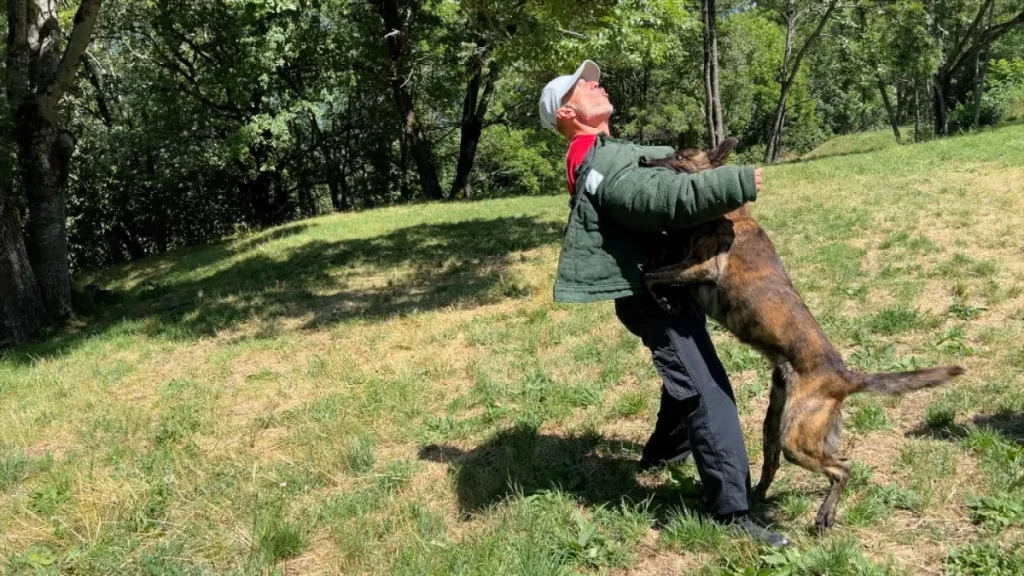
Dogs rushed to market as “fully trained” are often:
• Patterned on rehearsed scenarios
• Leash-dependent for control
• Aggression-forward rather than defense-first
• Poorly integrated into real homes
They are sold as ready. They are not reliable.
⸻
The Missing Ingredient: Judgment
Most training focuses on what the dog does.
Protection depends on when the dog chooses to act—and when it chooses not to.
A real Protection Dog must be able to:
• Tolerate non-threatening movement
• Differentiate stress from danger
• Defend without over-escalating
• Stop instantly when the threat ends
• Return immediately to calm family behavior
This is not just obedience.
This is judgment.
And judgment cannot be rushed or retrofitted.
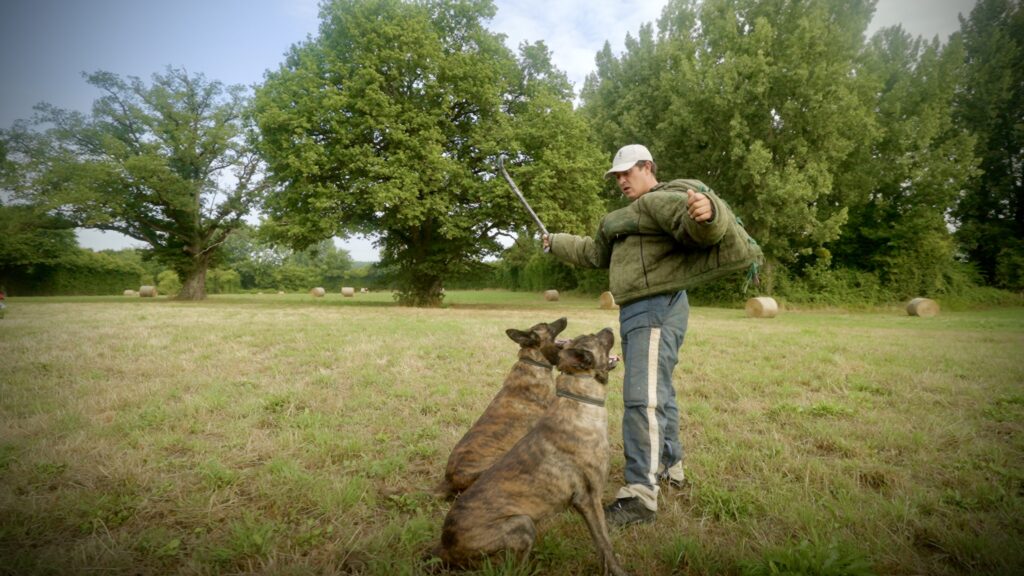
Watch our exclusive Counter-Kidnapping Capability
⸻
OFF-Leash Protection Changes the Definition of “Trained”
If a dog requires a leash to remain controlled, it is not fully trained for protection.
Leashes:
• Mask control deficiencies
• Create false confidence
• Introduce multiple failure points in real violence
A truly trained Protection Dog must demonstrate OFF-Leash Protection:
• Control without equipment
• Autonomous defensive engagement
• Reliable recall and cessation under stress
Without this, training doesn’t really exist—no matter how impressive it looks.
Visit our Protection Training Overview
⸻
Training vs Development: The Critical Distinction
Most sellers train dogs. Very few develop them.
Development means:
• Starting early, often in puppyhood
• Integrating protection, obedience, and socialization as inseparable systems
• Exposing the dog to a multitude of real environments—not just fields
• Teaching restraint as deliberately as force
• Engineering ON / OFF Switching from the beginning
This process takes time measured in years, not weeks or months.
Anything faster is a shortcut—and shortcuts show up at the worst possible moment.

⸻
Who a Truly Trained Protection Dog Is For
A real trained Protection Dog is not for:
• Buyers seeking intimidation
• People looking for instant solutions
• Owners unwilling to integrate properly
• Anyone who believes aggression equals safety
It is for:
• Individuals who value control over spectacle
• Families who want safety and love without instability
• Owners who understand responsibility and restraint
• People who want protection that works quietly, every day
⸻
The Question That Replaces “Is It Trained?”
The right question is not:
“Is this dog trained?”
It is:
“Can this dog make the right decision under pressure—and live safely with me the rest of the time?”
If the answer is not an unequivocal yes, the dog is not truly trained for protection—regardless of what the seller claims.
Visit our Fully Trained Protection Dogs
Author Credentials
Suede Michael Hussain
Founder & Master Protection Dog Trainer