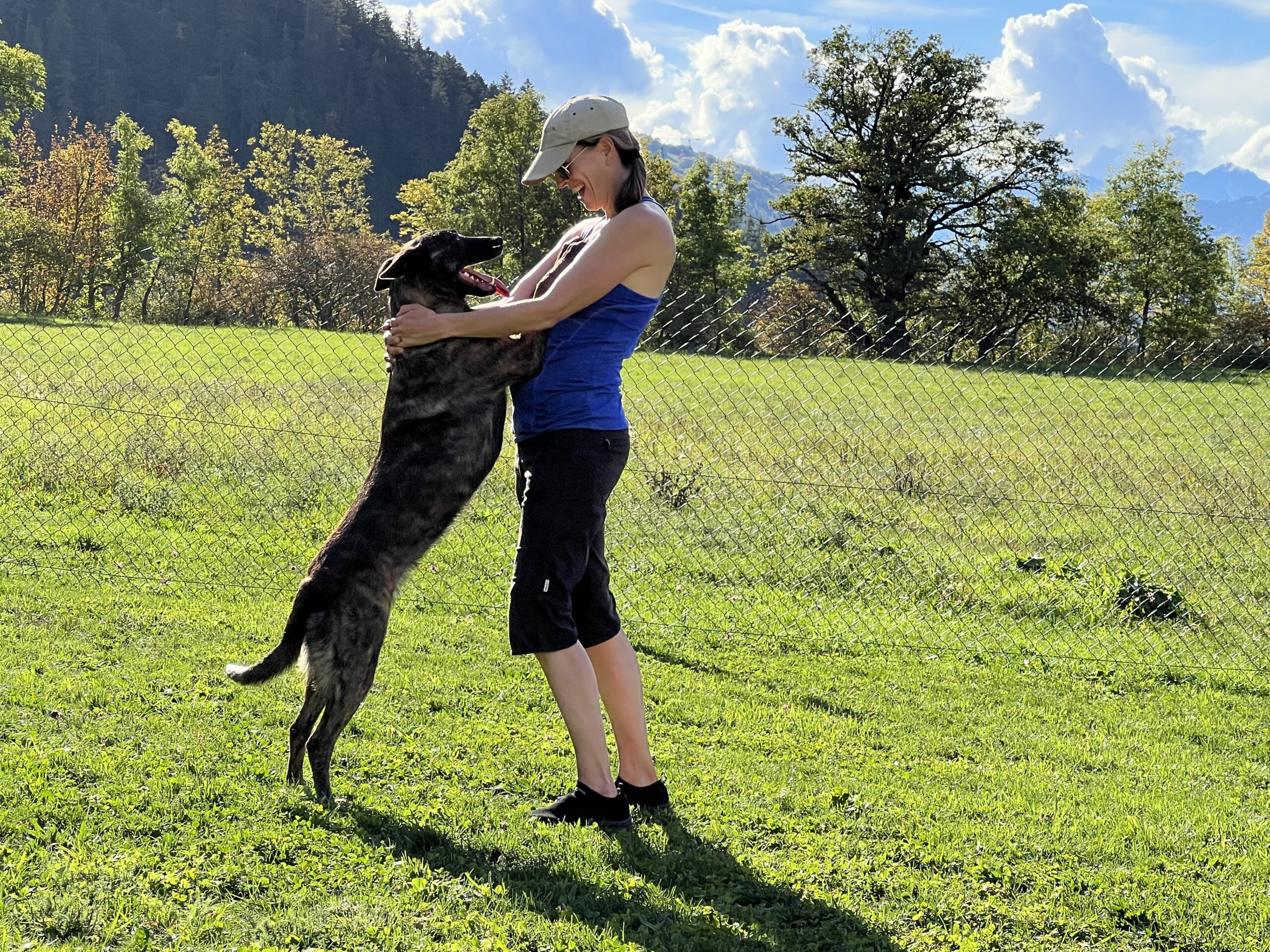
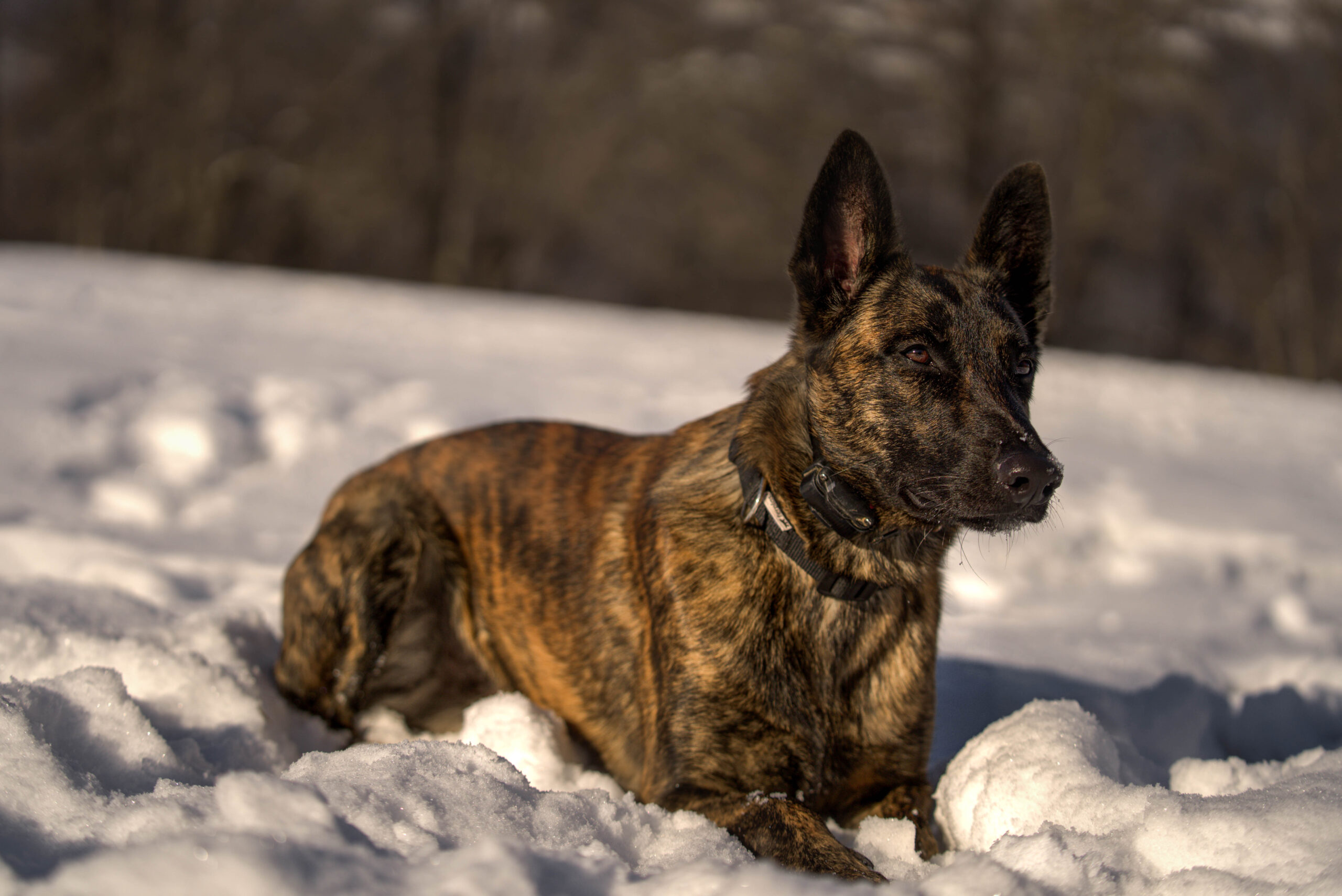
The Problem With “Personal Protection”
When people search for personal protection dogs for sale, they are usually looking for something very specific:
A dog that can protect them, live in their home, and remain safe around their family.
What most people receive instead is a dog trained for reactive aggression, not personal defense.
At AlpinHaus Shepherds, we see this confusion constantly. The word personal is used everywhere in the industry, yet almost never defined correctly.
A true Personal Protection Dog is not an aggressive animal. It is not a guard dog. And they are not sport dogs repurposed for as security dogs for sale.
It is a defense-first, handler-linked protection system—and that distinction changes everything.
⸻
What “Personal” Actually Means
A Personal Protection Dog must protect a specific person, not territory, not objects, and not abstract threats.
That means the dog’s primary role is:
• To stay connected to the handler
• To defend the handler’s physical space
• To exercise judgment, not just aggression
Most dogs marketed as “personal protection dogs” fail here immediately. They are trained to react outward—to stimuli, decoys, or rehearsed threats—rather than to defend inward, toward the person they are responsible for.
This is the core difference between theater and real protection.
⸻
Defense-First Protection: The Foundation of Real Personal Safety
At AlpinHaus, all personal protection begins with Defense-First Protection.
When a potential threat appears:
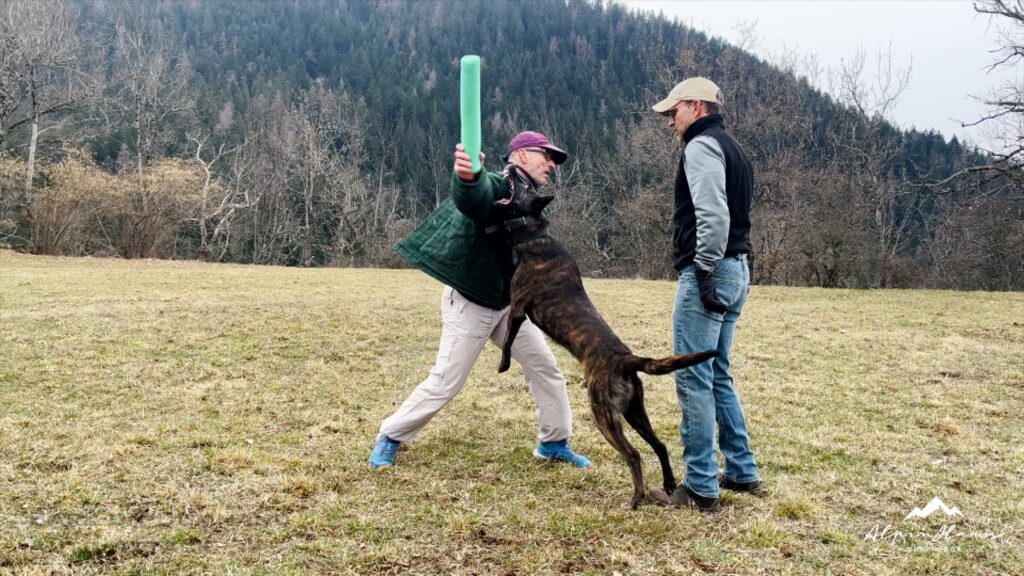
1. The dog is called to the handler
2. The dog assumes a controlled heel position at the handler’s left side
3. The dog is switched ON into Activated Defense Mode and defends space through presence and warning
As long as the threat maintains distance, no engagement occurs.
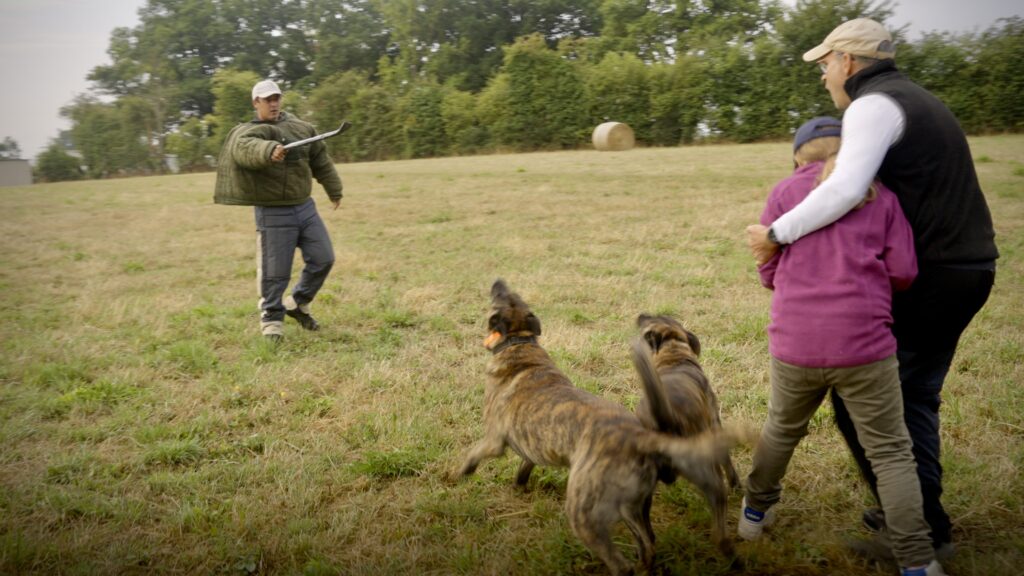
If the threat breaches critical distance and commits violence, the dog engages autonomously, without waiting for a command. Engagement is immediate, decisive, and defensive—not reactive or reckless.
This matters because real threats do not wait for instructions.
⸻
Why OFF-Leash Protection Is Non-Negotiable
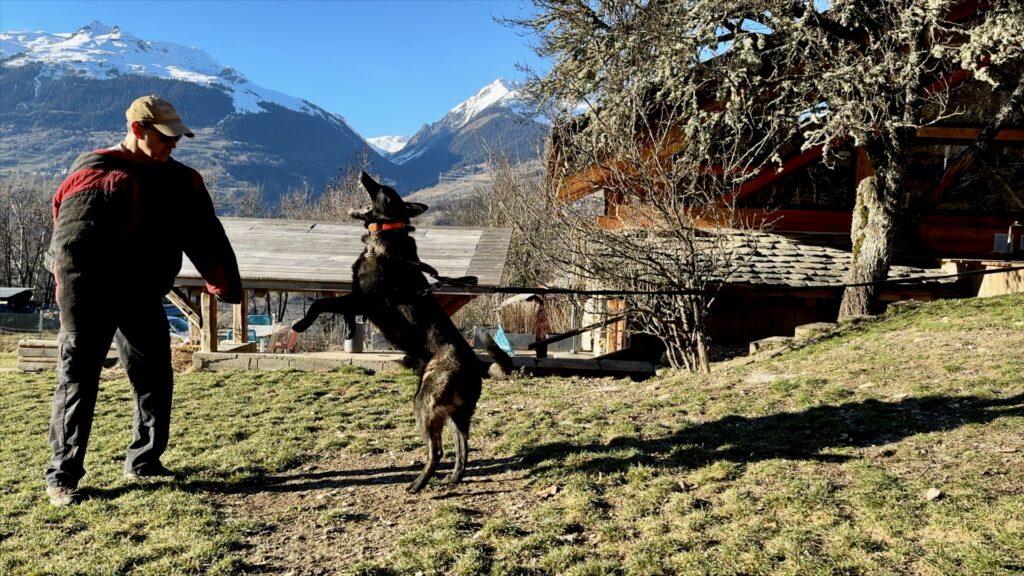
Any dog that requires a leash to remain controlled is not a Personal Protection Dog.
Leashes create:
• False control
• Delayed responses
• Dangerous entanglement in real violence
A Personal Protection Dog must demonstrate OFF-Leash Protection—complete control before, during, and after aggression without reliance on equipment.
If a dog cannot be trusted off leash in a protection context, it cannot be trusted at all.
⸻
Control During Aggression Is the Rarest Skill
Most trainers can teach a dog to bite.
Almost none can teach a dog to:
• Remain responsive during aggression
• Stop properly on command
• Recall off a threat
• Guard without escalating
• Return immediately to calm family behavior
This is why so many “personal protection dogs for sale” either under-protect or over-protect.
Both outcomes are failures of control under stress.
⸻
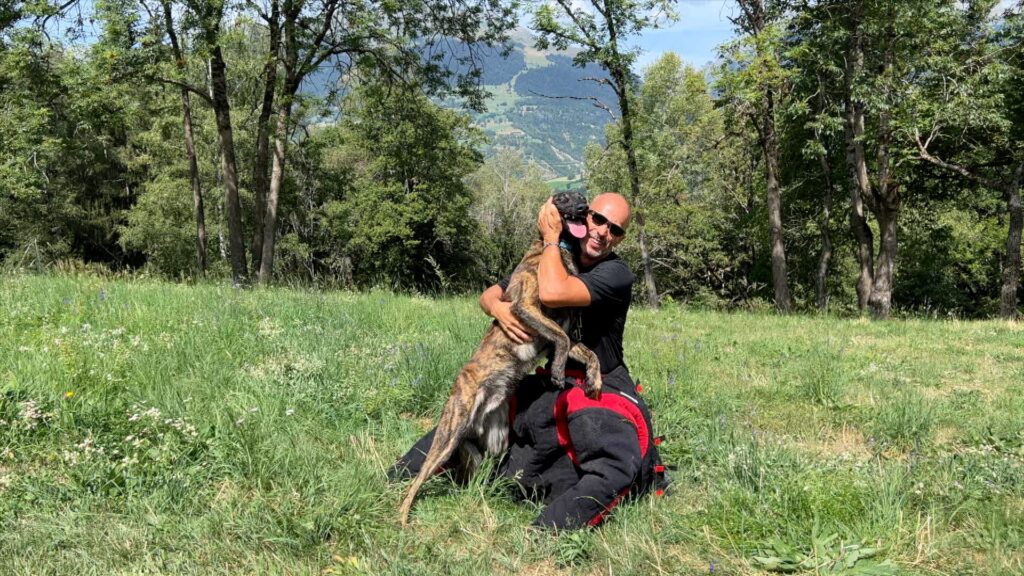
The Family Reality Most Sellers Avoid
A real Personal Protection Dog must:
• Live inside the home
• Be safe with children
• Accept guests
• Navigate public environments calmly
• Switch ON and OFF repeatedly without emotional residue
Dogs trained primarily for aggression often become liabilities in family settings. They may protect inconsistently, misread normal life as threat, or remain stuck in heightened arousal after engagements.
Post-Protection Socialization is not optional. It is a defining requirement.
⸻
Protection Dogs 1.0 vs Personal Protection Done Correctly
What most buyers encounter are Protection Dogs 1.0:
• Leash-dependent
• Decoy-patterned
• Aggression-forward
• Poorly socialized
True Personal Protection Dogs—what we define under Protection Dogs 2.0—are built differently from the start:
• Genetics selected for stability and courage
• Protection, obedience, and socialization trained as inseparable systems
• Real-world environments prioritized over fields and titles
• Judgment engineered before power
This difference cannot be added later. It must be designed from the beginning.
⸻
Who Should—and Should Not—Own a Personal Protection Dog
A Personal Protection Dog is not for everyone.
You should not pursue one if:
• You want intimidation rather than safety
• You want a status symbol
• You are unwilling to engage in integration and handling
• You expect the dog to replace personal responsibility
You should consider one if:
• You value control over spectacle
• You want family-safe protection
• You understand risk, judgment, and restraint
• You want a guardian, not a weapon
⸻
The Question That Defines Everything
The correct question is not:
“Do you have personal protection dogs for sale?”
It is:
“Can this dog defend me without endangering my family, my freedom, or my future?”
If the answer is not provably yes, the dog is not personal protection—no matter how it is marketed.
⸻
Final Thought
True personal protection is quiet, controlled, and invisible—until the moment it must act.
Anything else is not protection. It is liability.
Author Credentials
Suede Michael Hussain
Founder & Master Protection Dog Trainer