The Most Capable Protection Breed—and the Least Forgiving
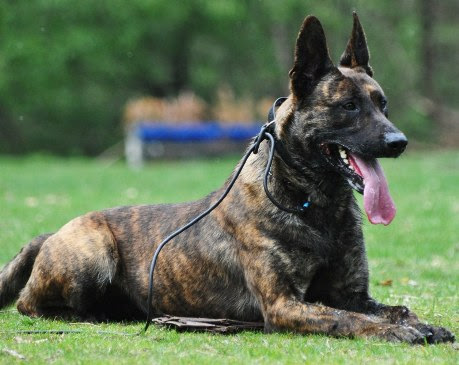
The Belgian Malinois has earned a reputation as the premier modern Protection Dog. That reputation is deserved—and frequently abused.
When buyers search for trained Belgian Malinois for sale, they are often drawn to speed, intensity, and the breed’s association with elite military and police units. What they rarely understand is this:
The Belgian Malinois does not forgive training and development mistakes.
It magnifies them.
At AlpinHaus Shepherds, we work almost exclusively with Malinois and Dutch Shepherds for one reason: when developed correctly, no other breeds offer comparable speed, cognition, and defensive capability.
But we also reject the vast majority of Malinois as unsuitable for personal or family protection. ⸻
Why the Belgian Malinois Is So Powerful
When properly selected and developed, the Belgian Malinois offers:
- Elite acceleration and agility
- High situational awareness
- Advanced problem-solving under stress
- Explosive defensive interception
- Strong handler engagement
These traits make the Malinois uniquely suited for Defense-First Protection, where milliseconds and judgment determine outcomes.
But those same traits are why the breed fails so often when “trained” incorrectly.
⸻
Why “Trained” Means Less With a Malinois
With many breeds, mediocre training produces mediocre results.
With a Malinois, mediocre training produces danger.
Common failures in trained Malinois include:
- Over-reactivity to movement
- Inability to shut off after arousal
- Misinterpretation of normal behavior as a threat
- Compulsive drive expression
- Handler conflict under stress
These dogs are not “too much dog.” They are poorly developed dogs whose traits have been amplified.
⸻
Genetics Set the Ceiling—Especially in Malinois
Conventional training does not create stability. It reveals it.
Genetic weaknesses in Malinois often show up as:
- Weak nerve strength
- Poor recovery after stress
- Low frustration tolerance
- Environmental sensitivity
- Inability to disengage
No amount of conventional training within the Protection Dogs 1.0 context can reliably fix these traits. With Malinois, genetics matter more—not less.
This is why most Malinois bred for sport, intensity, or drive alone should never be sold as protection dogs unless they are destined for or have completed a high- quality training program. Of which there are VERY few.

⸻
Why Most Trained Malinois Are Not Personal or Family Safe
Many trained Malinois can “work.” Very few can live.
Problems commonly appear in homes because:
- The Dog remains in a constant elevated state
- The Dog cannot tolerate chaos or children
- The Dog guards the space instead of the people
- The Dog lacks an ON / OFF Switching
A Malinois that cannot repeatedly transition from calm family life to protection and back again is not a real-world Personal or Family Protection Dog—regardless of its bite strength or speed. ⸻
ON / OFF Switching Is the Malinois Dealbreaker
For a Belgian Malinois to function safely as a trained Protection Dog, it must master ON / OFF Switching:
- Calm, affectionate, neutral by default
- Explosive and decisive only when required
- Immediate return to calm after engagement
This capability is rare. It requires:
- Correct genetics
- Early, intentional socialization
- Protection, obedience, and socialization trained as inseparable systems
Without this, a Malinois becomes a liability—fast.
⸻
Why Start-From-Puppy Development Matters Even More
Adult Malinois trained elsewhere often carry:
- Patterned aggression
- Environmental blind spots
- Poor social conditioning
- Incomplete judgment frameworks
These issues cannot be reliably removed later.
True personal or family protection Malinois must be developed from puppyhood, where restraint, neutrality, and judgment are engineered alongside capability.
You cannot retrofit discernment into a fully mature Malinois.
⸻
OFF-Leash Protection Reveals the Truth
Leashes hide deficiencies—especially in Malinois.
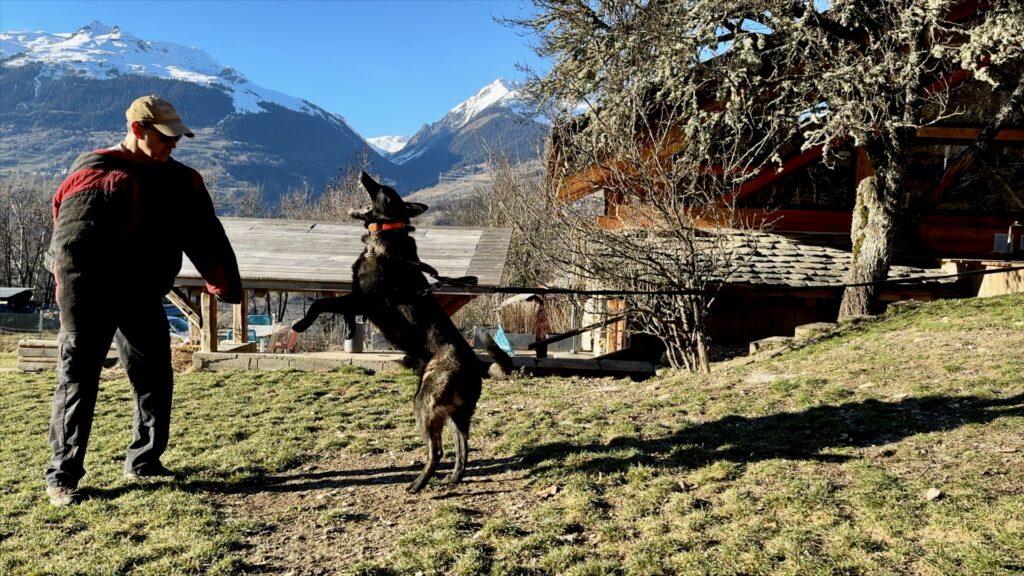
A trained Belgian Malinois must demonstrate OFF-Leash Protection with:
- Full impulse control
- Autonomous defensive judgment
- Immediate obedience inside aggression
- Clean disengagement and recall
If the leash is doing the controlling, the dog is not trained—it is contained.
⸻
Who Should—and Should Not—Buy a Trained Malinois
A Belgian Malinois is not for:
- First-time protection dog owners
- Intimidation seekers
- Buyers unwilling to integrate properly
- Anyone who equates intensity with safety
It is for:
- Owners who value restraint over spectacle
- Individuals who understand responsibility
- Families who demand stability and judgment
- Buyers who want a guardian, not a weapon
⸻
The Question That Matters With Malinois
Instead of asking:
“Is this Belgian Malinois trained?”
Ask:
“Can this dog choose restraint repeatedly—and still act decisively when required?”
If the answer is not a clear yes, the dog is not trained for protection—no matter how impressive it looks.
Final Thought
The Belgian Malinois is not dangerous because it is powerful.
It is dangerous when power exists without judgment.
When genetics, development, and control align, it becomes the most capable protection dog in existence.
Anything less is a mistake that moves very fast